
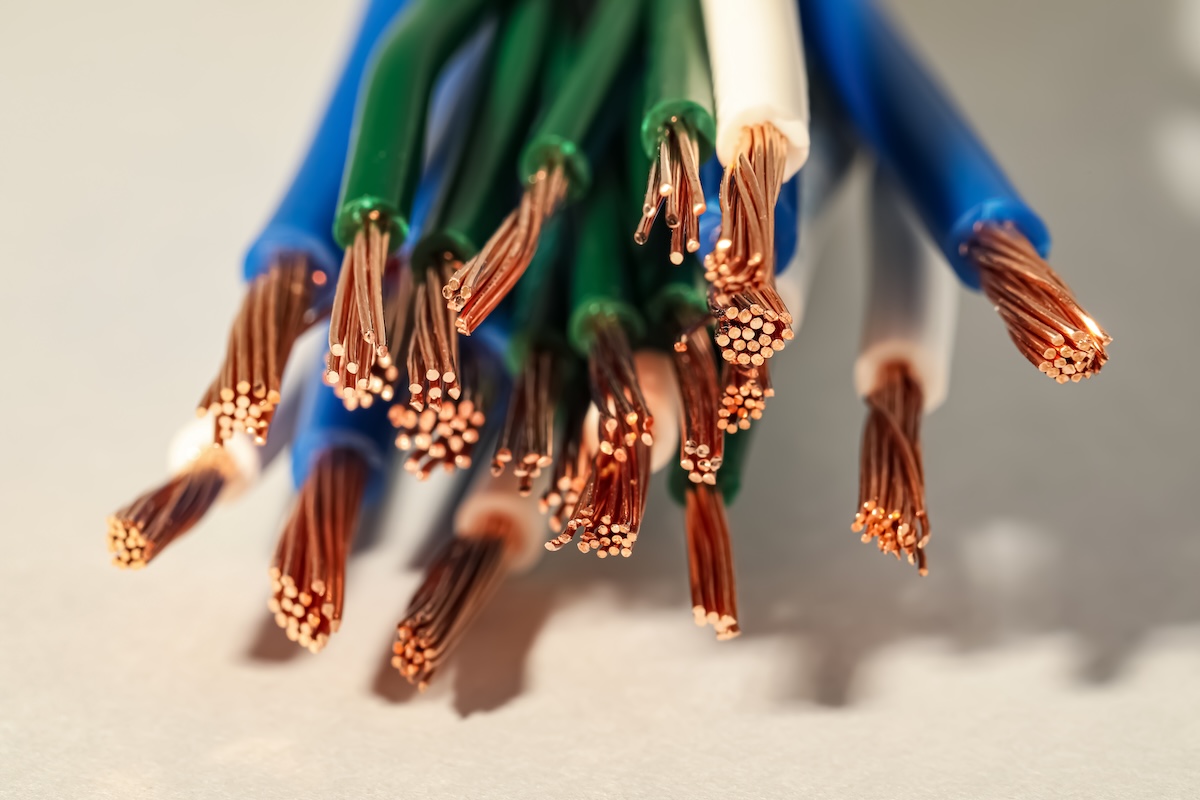
A thief can strip a few hundred dollars of copper from a substation or a rail corridor in a single night. The operator is then left with an outage, a safety hazard, and a repair bill that runs into many multiples of what the metal was ever worth. Not to mention the disruption to thousands of commuters who are left stranded, or homes without power. That imbalance, small reward to the offender and large consequence to everyone else, is what makes copper theft one of the more under-appreciated risks facing critical infrastructure today.
Unfortunately, it is also getting worse. In a single recent year, the North American Electric Reliability Corporation's E-ISAC recorded more than 3,500 physical security breaches at grid facilities, roughly ten times the figure of a decade ago. US utilities now lose close to USD 920 million a year to copper theft. The pattern is the same across energy, rail, water, and telecommunications, and it is happening all around the world.
As a surprise to no one, the simple driver is price. Copper has been trading near record highs, briefly passing USD $14,500 per tonne in January 2026 after topping USD $12,000 for the first time only weeks earlier in December 2025. Several forces are pushing it up at once: global trade uncertainty and a build-up of inventories in the United States, supply disruptions at major mines, and structural demand from electrification, data centres, and AI. When the metal is this valuable, more people are willing to take the risk, and the sites they target first are usually the ones that are remote and lightly secured.
Remote substations are the classic target. They are often unmanned, spread across large sites, and full of accessible copper. In February 2025, an attempted theft at an NV Energy substation near the Las Vegas Strip caused outages affecting the airport, Allegiant Stadium, and a number of hotels. In March 2026, copper theft at an Appalachian Power substation in Wheeling, West Virginia cut power to thousands of customers. A small theft at the right point in the network can take out power for an entire area.
Signalling cable is critical, buried, and exposed across long corridors. In May 2025, the theft of roughly 150 metres of copper cabling on Spain's flagship Madrid to Seville high-speed line crippled signalling and disrupted more than 10,000 passengers in a single day. In the United States, copper thieves hit Sound Transit's light rail in Washington twice inside two weeks in June 2025, forcing commuters off trains and onto buses. The same pattern reached New Zealand in June 2026, when an attempt to steal copper cabling inside a railway tunnel halted commuter trains between Wellington and Porirua and sent operators scrambling for replacement buses.
The reach of the problem extends well beyond power and rail. Documented thefts have disabled tornado warning sirens, knocked out power to thousands of residents, and compromised an FAA communications tower. In New Zealand, thieves recently dug up around 150 metres of cable from a water supply site near Rotorua. The metal taken is small. The systems it brings down are not.
For data centres, power continuity is existential. A copper theft event that disables a feeding substation or backup infrastructure is a direct operational and reputational risk, which is one reason perimeter and infrastructure monitoring is moving up the agenda for operators across the sector.
Copper in a substation is frequently part of the grounding system, and that is where copper theft becomes a serious safety problem, not just a continuity problem. Remove the grounding and equipment that should never carry a charge can become energised, overheat, and fail. Maintenance crews who switch to ground switches, confident the system is safe, can be electrocuted by charges they have no reason to expect. The thieves themselves are regularly injured or killed cutting into live equipment. Stripped conduit and open junction boxes then leave electrocution hazards for workers, first responders, and the public for weeks after the original theft. A theft that looks like petty crime on the surface can put lives at risk long after the offender has left the site.
The sites most exposed to copper theft are often remote, and spread across large perimeters, and that is exactly where conventional security is stretched thin. A fence on its own can be climbed or cut. Cameras need someone watching, lose effectiveness at night and across long fence lines, and generate noise that is easy to tune out. Closed-circuit footage tends to confirm what happened after the copper is already gone. What an operator actually needs is to know that someone is at the fence line, or disturbing the ground outside the site, while there is still time to respond.
This is where fibre optic sensing changes the picture. FFT's Aura Ai-X turns an existing fence line into a sensing system that detects, classifies, and locates activity along a perimeter in real time. Its deep learning algorithms drive nuisance alarms towards zero, so wind, rain, birds, and benign activity, such as passing trains, are recognised for what they are rather than triggering nuisance alerts that security crews learn to ignore. Where the risk sits at ground level rather than at the fence, buried fibre extends the same capability into site monitoring, picking up digging, ground disturbance, vehicle movement, and pedestrian activity in restricted areas.
That combination suits the realities of copper theft well. The technology covers long perimeters and remote sites, locates an event accurately along the cable so a response can be directed to the right point, and requires no powered electronics out in the field. For substations, rail corridors, water sites, and the wider footprint of critical infrastructure, including the unmanned locations where there is no one on the ground to notice an intrusion in progress, it provides early situational awareness rather than after-the-fact evidence.
The copper price will keep moving, and while the reward is there, the attempts will continue. The operators who come through best are the ones who can see activity at the perimeter and across their sites early enough to act, rather than discovering the loss once the power is already out and the safety hazard is already in place. Monitoring the perimeter is the difference between responding to a threat and cleaning up after one.