
A perimeter protection system does not sense an intrusion in the abstract. It senses the physical response of a specific fence to a specific action, and the three most common security fences respond very differently.
Palisade is built from vertical steel pales fixed to horizontal rails. It is rigid, difficult to climb because there are few footholds, and hard to cut through quickly. When it is struck or someone attempts to force it, the impact rings and travels sharply through the structure. Cutting a pale produces its own distinct, high-energy event. Palisade tends to generate clean, punchy signals rather than a constant background hum.
Welded mesh, including the high-security "358" style used around many prisons and utilities, is a rigid grid of horizontal and vertical wires welded at every intersection. The apertures are small, which gives an intruder almost no foothold and makes climbing awkward, so attacks skew towards cutting. Because the panels are stiff, a cut or an impact transmits cleanly and sharply along the fence, with far less flex-related noise than a looser fence.
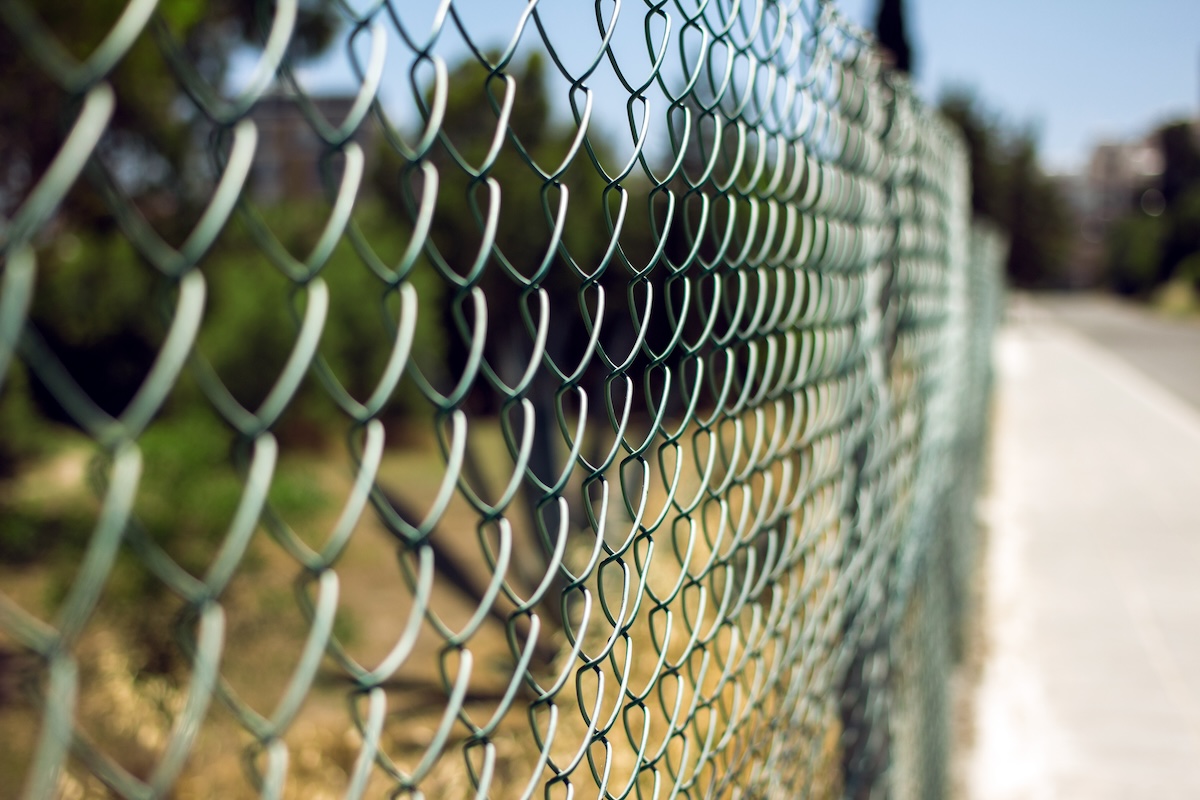
Chain-link, or chainmesh, is a woven diamond pattern that is flexible by design. That flexibility is exactly why it is easier to climb and quicker to cut, and it is also why it moves so much more than palisade or weldmesh. A determined climber produces a sustained rattling, flexing signature, while wind and passing vehicles set the whole fabric moving. On chain-link, the challenge is separating the movement that matters from the movement that does not.
Point a single, fixed detection setting at all three and the outcome is predictable. Tune it tightly enough to catch a careful cut on rigid weldmesh and it may miss a climber on flexing chain-link. Tune it to catch everything on chain-link and it will alarm every time the wind gets up. The signature is different, so the detection has to be different.
Aura Ai-X turns the fence line into the sensor. A fibre optic sensing cable is mounted along the fence, and the fence itself becomes the detection medium, listening for activity all the way along its length with no need for electronics or power out in the field.
What makes the difference is what happens to that signal. Aura Ai-X uses deep learning to recognise the acoustic signature of different activities, because climbing, cutting, digging, walking, vehicle movement and environmental noise do not behave the same way. The system is trained to the specific fence it is protecting and continues to learn from FFT's global data library, so it can classify what it is hearing before an alert reaches an operator. FFT reports a probability of detection above 95%, a nuisance alarm rate driven close to zero, and location accuracy to within around two metres.
The result is context. Operators learn what type of activity is occurring and exactly where along the perimeter it is happening. On a busy site, that same capability supports monitoring as much as security. Operators gain situational awareness across the whole boundary, so they can tell expected movement from activity that needs a response and see it located to the metre. A camera can then verify the event because the fibre has already told it where to look.
The common thread across palisade, weldmesh, chain-link and chainmesh is that each one speaks a slightly different language when it is disturbed. A fence detection system earns its place by understanding that language and configuring for it, rather than treating every perimeter as if it were the same.
That is where fibre optic sensing has become the foundation of many of the most secure sites in the world. It makes the fence useful, turning a passive boundary into an active source of information.
Whatever the fence, Aura Ai-X is built to protect it. When it comes to the different fence types out there, protecting all of them is exactly what we do.